
counterfeit-money-price7792
counterfeit-money-price7792
9 Lessons Your Parents Taught You About Realistic Counterfeit Money
Understanding Realistic Counterfeit Money: An Informative Overview
Counterfeit money has been an enduring problem throughout history, affecting economies and people alike. As technology continues to evolve, so too does the sophistication of counterfeiters. The expansion of realistic counterfeit money poses a significant challenge for federal governments and banks. This blog post will check out the intricacies of counterfeit money, how to recognize it, the technologies behind its production, and the legal implications included.
What is Counterfeit Money?
Counterfeit money refers to currency that has been produced with the intent to deceitfully use it as legitimate tender. It is often created to imitate the initial currency so carefully that it can be hard for an untrained eye to identify its inauthenticity. Counterfeit bills can result in serious financial losses for organizations, merchants, and consumers.
A Brief History of Counterfeit Money
Counterfeiting has been around since the intro of currency itself. The Table 1 below lays out some crucial milestones in the history of counterfeit money:
| Year | Occasion Description |
|---|---|
| 1660 | The Bank of England introduced banknotes, causing the first instances of counterfeiting |
| 1861 | The U.S. government issued its very first paper currency, resulting in increased counterfeiting efforts |
| 1929 | The U.S. revamped its currency to fight counterfeiting |
| 1996 | Intro of a more secure U.S. ₤ 100 costs featuring sophisticated anti-counterfeiting technology |
How Is Counterfeit Money Created?
The production of Realistic Counterfeit Money (https://www.kenfriedman.top/finance/unveiling-the-art-of-prop-money-realistic-currency-for-the-silver-screen) can include a number of techniques, consisting of printing, scanning, and digital manipulation. Typically, counterfeiters use high-resolution printers and specialized software application to create near-identical copies. The following techniques are frequently utilized:
- Inkjet and Laser Printing: These methods enable counterfeiters to print high-quality copies of banknotes with fine details.
- Offset Printing: An advanced strategy that produces much more precise recreations by layering inks.
- Digital Imaging: Counterfeiters can scan genuine currency and usage photo modifying software to change and replicate it.
- Specialized Paper: Some counterfeiters go as far as to reproduce the texture and weight of genuine currency paper for an included layer of authenticity.
Table 2: Counterfeit Production Techniques
| Method | Description | Level of Difficulty |
|---|---|---|
| Inkjet & & Laser | Atmosphere-friendly, replicates styles precisely | Moderate |
| Offset Printing | Professional-grade technique, high production costs | High |
| Digital Imaging | Makes use of software to produce custom-made styles | Moderate to High |
| Specialized Paper | Imitates the quality of real currency | High |
Recognizing Counterfeit Money
Acknowledging counterfeit money might seem tough, however there are a number of methods available for customers and companies. It is vital to be knowledgeable about these features when dealing with cash.
Modern Currency Security Features
Many countries execute several anti-counterfeiting innovations in their banknotes. Some security features to look for include:
- Watermarks: Most contemporary banknotes have a watermark that shows up when held up to the light.
- Color-Shifting Ink: This special ink changes color when the note is tilted, which is hard to duplicate.
- Microprinting: Tiny text or patterns that are not easily noticeable to the naked eye can be present on genuine notes.
- Raised Printing: Many real banknotes have raised printing on certain areas that you can feel with your fingers.
- Security Thread: A thread that is embedded in the paper and can be seen when held versus the light.
Table 3: Currency Security Features
| Security Feature | Description | How to Check |
|---|---|---|
| Watermarks | Semi-transparent images on the expense | Hold up to the light |
| Color-Shifting Ink | Ink modifications color when slanted | Tilt the costs |
| Microprinting | Tiny text designed to be difficult to reproduce | Utilize a magnifying glass |
| Raised Printing | Text that can be felt when touched | Rub your finger over it |
| Security Thread | Embedded thread noticeable under light | Hold versus light |
Legal Implications of Counterfeiting
Producing or utilizing counterfeit money is a severe criminal activity in practically every nation. Participants can deal with severe effects, including large fines and imprisonment. In the United States, for example, counterfeiting is a federal criminal activity punishable by approximately 20 years of imprisonment.
Regularly Asked Questions (FAQ)
1. Is it illegal to have counterfeit money?Yes, possessing counterfeit money is prohibited, even if one is unaware of its inauthenticity.
2. How can organizations secure themselves from counterfeit money?Companies can buy currency verification devices, conduct routine employee training on counterfeit detection, and execute rigid cash handling procedures.

3. What should I do if I receive suspected counterfeit money?If you think you have received counterfeit money, do not try to spend it. Instead, report it to regional law enforcement and turn it over for assessment.
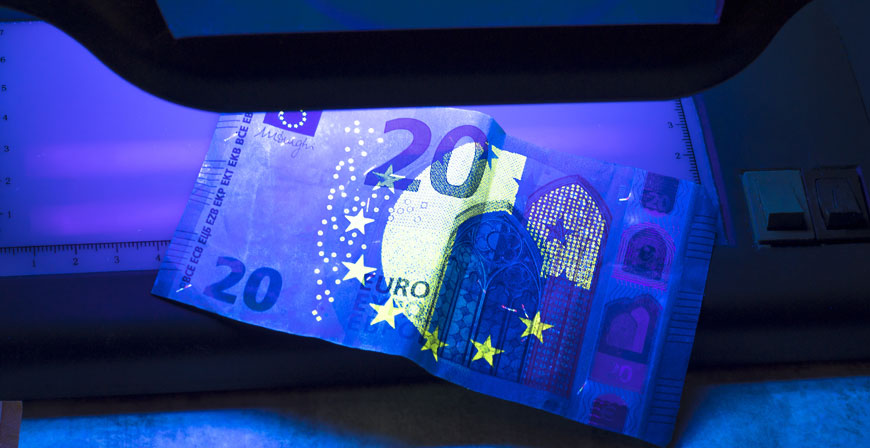
4. Can innovation help in identifying counterfeit money?Yes, various technologies, including UV scanners and currency verification makers, can help detect counterfeit currency efficiently.
5. Exist specific countries more impacted by counterfeiting?While counterfeiting is a global problem, countries with lower security procedures on their currency might be more prone. However, no nation is completely immune.
Understanding realistic counterfeit money, its production techniques, security features, and legal implications is essential for the wellness of economies and people. By remaining notified and alert, consumers and entrepreneur can do their part to combat the counterfeit crisis. Being educated about the characteristics of authentic currency and without delay reporting counterfeiting activities can assist preserve the stability of our financial systems. In a world where technology constantly advances, guaranteeing awareness of counterfeiting dangers is more essential than ever.